• Skip to primary navigation
  • Skip to main content
FACT – Fencing and Construction Training

FACT - Fencing and Construction Training

The largest specialist provider of training, advice and support to the fencing industry within the UK

  • Home
    • Training Course Calendar
    • FaCT New Head Office
    • VRS & Vocational Training Centre
    • Training Management Services
    • On-line Company Training Record (OCTR)
  • Online Courses
    • Health & Safety Awareness Level 1
    • Manual Handling Training
    • Location of Underground Services and Using Cable Avoidance Tools
    • Safe Use of Power Tools
    • Safe Use of Abrasive Wheels
    • Banksman Training
  • Training
    • Health & Safety Courses
      • Health & Safety Awareness Level 1
      • SSSTS
      • SSSTS R
    • Vocational Courses
      • Location of Underground Services and Using Cable Avoidance Tools
      • Safe Use of Abrasive Wheels
      • Safe Use of Power Tools
      • Manual Handling Training
      • Post Driver Training
    • Streetworks
    • Vehicle Restraint Systems
    • Introduction to Fencing
    • Course Calendar
    • Training Management Services
    • Training Venues
  • Qualifications
    • Level 2 Diploma – Fencing
    • VRS level 2
    • Level 3 Diploma – Fencing
    • Level 3 Landscaping
    • L5 Diploma
    • L1 Health & Safety
  • Cards
    • Green Labourers FISS/CSCS Card
    • Blue Skilled Installers FISS/CSCS Card
    • Gold Supervisors FISS/CSCS Card
    • Black Managers FISS/CSCS Cards
    • CSCS Skills Card
    • Plant and Machinery – CPCS cards
  • Blog
  • About Us
    • Meet the FaCT Team
    • ROLO Self Certification
    • Course Terms and Conditions
    • Customer Complains Procedure
    • Data Protection Policy
    • Resources
  • Student
  • Contact Us

businessequip

Health And Safety In The Construction Industry – Where We’re At Now

October 20, 2017 By businessequip

Health And Safety In The Construction Industry- Where We’re At Now

The construction industry is clearly a rewarding and engaging career. However, it is often dangerous due to the nature of the work. The fast paced environment, heavy machinery and tools, working at heights and various other aspects all combine to make the industry one of the most hazardous to operate in. However, strict and detailed health and safety legislation is in place in order to reduce these risks. Furthermore, health and safety in the construction industry receives a lot of attention. Stories of firms receiving fines and penalties for flouting these rules and regulations are common. The statistics concerning health and safety in the construction industry are still very worrying.

CONTACT US

A Brief History

Historically, the construction industry is one of the most hazardous industries in the UK. Previous statistics have made uncomfortable reading. For example, according to the HSE, there were 80 fatalities in 1997 in the construction sector. In 1998 and 1999 there were 65 and 81 respectively. Evidently, health and safety has traditionally been an issue in the construction sector.

YearFatalities
199780
199865
199981

Over the years various legislation has been introduced in an attempt to tackle the health and safety issues in the industry. For example, Working at Height Regulations were introduced in 2005. More recently in 2015 were the CDM (Construction, Design and Management) regulations. The implementation of this legislation, is of course, important to health and safety. However, we believe that education is crucial. Through training of all levels of  workers, from operative to director, we believe that these worrying statistics can be reduced. However, there are many dangerous misconceptions regarding training.

A worrying trend.

We recently exhibited at UK Construction Week at the NEC. The show was a lot of fun and we met some great people. However, there was a worrying trend of replies we got when talking about training. Many self-employed contractors and non-site workers would reply that ‘I don’t need training’ or ‘I don’t work on sites’. We want to highlight why these opinions are so dangerous. The HSE states ‘Risks on larger projects can be substantial but, generally, large projects are better at controlling risks than most small projects, where there can be a lack of awareness of even basic health and safety standards’.  Furthermore, they identify that small businesses account for the majority of fatal incidents. Yes we acknowledge that the smaller businesses outnumber the larger construction firms. But the risks on smaller jobs should be easier to control. We believe that basic health and safety training for operatives and managers will hugely improve these statistics.

Clearly, health and safety in the construction industry is improving. The health and safety legislation and training is making a difference. This is evident with (30) the lowest number of fatalities on record in 2016. However, there is still a long way to go. 30 deaths in the industry is 30 too many. Furthermore, although the construction industry makes up just 7% of the UK workforce, around 25% of workplace deaths in the past 5 years have occurred in the construction industry. The industry needs to work to reduce these figures and training is one method of making a drastic change.

For information about our products and services please visit our website, or get in touch today on 0121 809 3177.

CONTACT US

Trinity Fencing CIC- Investing in the community – Employing the Unemployable

October 6, 2017 By businessequip

Trinity Fencing and Landscaping CIC are, at first glance, your average fencing company. But if you delve a little deeper, the extraordinary nature of the organisation becomes crystal clear. They have been running a programme ‘Employing the Unemployable’ working with ex-offenders for the past 2 years. The programme provides opportunities for ex-offenders by securing an employment placement and a subsequent apprenticeship with FaCT. Simon Gadd, the director of Trinity Fencing CIC formed the programme after working with prisoners in Rochester Prison.


Trinity Fencing - FaCT- Employing the Unemployable
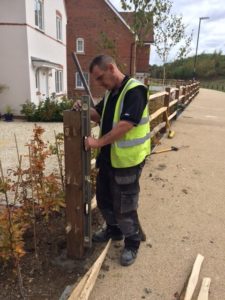
One of the Apprentices at work

The Project

The 3 year project begins with the candidate starting an employment with Trinity Fencing CIC and then being enrolled by FaCT onto our apprenticeship programme. However, Simon and the team do not stop here. They recognise that employment and accommodation are two barriers to re-integration into society and reasons for re-offending. Ex-offenders are often left homeless with no fixed address. So the job hurdle is sorted. Next, Trinity Fencing CIC turn their attention to housing. During the early stages of the apprenticeship Trinity Fencing CIC help source and pay for housing for the apprentice. In addition, they mentor and guide each trainee, offering counselling where necessary in the hopes of giving them a new purpose. This helps the trainee maintain a stable home and work life.

FaCT are a partner in the training delivery of this programme. FaCT provide the academic and qualification delivery of the scheme. Which affords the apprentice with around 20 certificates. Furthermore, they gain 2 licences and 2 qualifications. We have seen first-hand what a difference Trinity Fencing CIC are making and will continue to work with and support them in their project. Finally, we’d just like to say well done to Simon and the team. Long may your great work continue!

Trinity Fencing CIC LogoFaCT Logo

FaCT Committed to Reducing Unemployment in Birmingham

September 28, 2017 By businessequip

FaCT Committed to Reducing Unemployment in Birmingham

Hi everyone!

We have recently received the exciting news of approval of the funding, which allows us to deliver no cost training to the unemployment sector in Birmingham. And we couldn’t be happier! Our managing director Tim Drew comments that:

“As an organisation we really care about Birmingham and it’s citizens. We relish the opportunity to offer the unemployed people of Birmingham free training. We’ve ran this course before so we’ve seen firsthand what a difference it makes to peoples lives. This is incredibly rewarding!”

The Course

The course, a two week training programme, rewards the successful candidate with a CSCS card in addition to a portfolio of training certificates. With the programme usually costing around £1,250 its beneficial to both employers and the candidates. Candidates will receive the ‘Tickets’ into the industry, and the employers will save the investment of both time and money involved in training a non card holder. By completing this course the participant will be ready to start work in the industry, with no further investment necessary. The training takes place at our HQ in Northfield and all resources are provided, although candidates can bring their own if they prefer. The course is a mix of classroom content and practical elements such as power tool and fencing sessions.

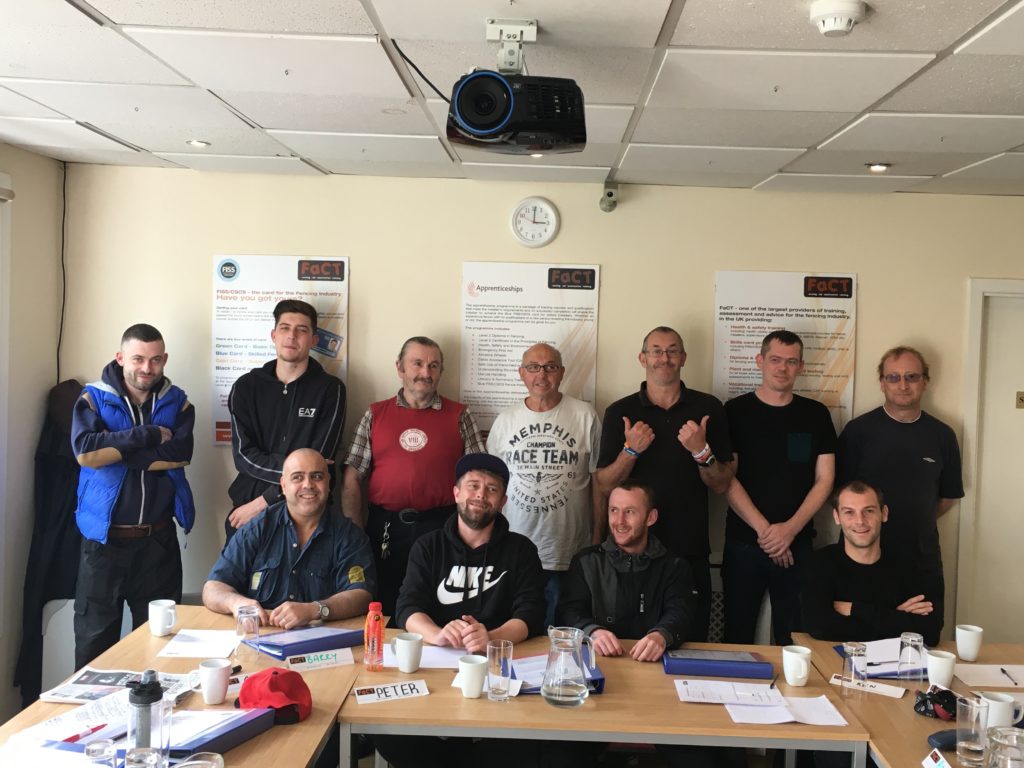
The first group to train on the scheme (pictured below) since it’s renewal finished last week, one of the participants Trevor states that.:

“The course was great, it was challenging but rewarding. I really enjoyed it and it’s changing peoples lives!”

If you’re want to know more about the course please get in contact with FaCT on 0121 476 4731

Unemployed training in Birmingham

Slider 2

November 9, 2016 By businessequip

Slider 1

November 9, 2016 By businessequip

  • « Go to Previous Page
  • Page 1
  • Interim pages omitted …
  • Page 4
  • Page 5
  • Page 6
  • Page 7
  • Page 8
  • Interim pages omitted …
  • Page 13
  • Go to Next Page »

FACT - Fencing and Construction Training

Copyright © 2026 · Site created by Business Equip · Log in

  • Home
  • Online Courses
  • Training
  • Qualifications
  • Cards
  • Blog
  • About Us
  • Student
  • Contact Us